Throughout the month of May, we celebrate Asian Pacific Islander Desi American/Asian (APIDA/A) Heritage Month and highlight the important role that the members of this community have played in our shared history. We also spotlight members of the MSU community who strive to uplift these individuals and advance belonging through research and advocacy.
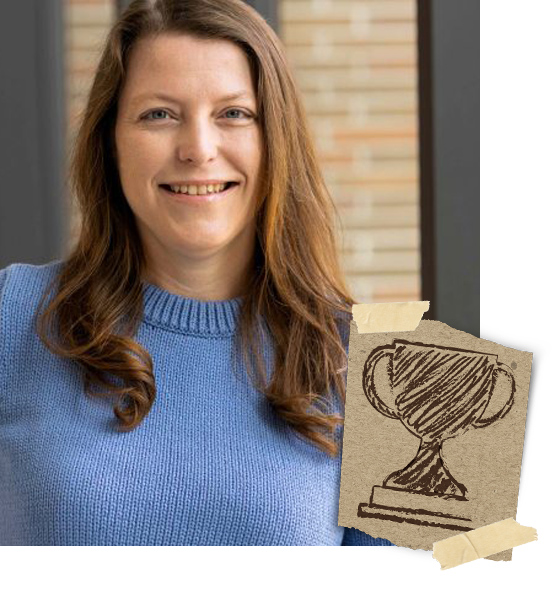
Our May Access Champion is Stacey Camp, Associate Professor of Archaeology, Director of the MSU Campus Archeology Program and MSU Museum Curator of Archaeology. She came to Michigan State in 2017 after following the work of the late Lynne Goldstein for several years and being inspired by her creation of the Campus Archaeology Program.
Camp has always been motivated by the ways in which archaeology can both illuminate the past and connect it with modern individuals. “Archaeology is a really great mechanism for sharing stories,” she said. “People are automatically drawn to things that they can touch and experience.”
Michigan State’s extensive use of digital archaeology has afforded Camp the ability to expand upon her research into 19th and 20th century Asian American experiences that she first began in graduate school. In particular, Camp has continued to publish her findings from excavations of the Kooskia Internment Camp in Idaho.
“If I hadn’t come to Michigan State, I wouldn’t have been able to build the Internment Archaeology Digital Archive that shares the stories and archaeology of Japanese Americans who were incarcerated in Idaho in our country during World War II,” she said.
Camp’s initial interest in the racial politics and history of migration stemmed from lingering questions she had from growing up in Orange County, California near the Mexico-United States border. Her dissertation project examined the conditions faced by migrant workers living in company housing in California while working for an American railroad company. This project laid the groundwork for much of her archeological and archival research into Japanese American experiences both prior and during World War II.
Camp primarily researches incarcerated Japanese individuals who failed to receive American citizenship due to exclusionary laws but were still housed in US internment camps. She compares and contrasts official government records kept during the time of internment with physical evidence excavated from the camps. “Archaeology is really important to adding to the story and revealing things we might not know about,” she said.
“We hear a lot in history classes about incarceration camps in Europe, but it’s also good to be aware of things that happened right here, to people who in many cases were American citizens,” Camp added. “None of these people committed any crimes. Their only crime was being Japanese American.”
Through this research, Camp has also developed a digital curriculum kit that grade school teachers can utilize to educate students on this history. In addition to examining the items that Japanese Americans brought with them to internment camps, she also has been cataloging objects from a Japanese American community in Santa Barbara that reveal what these individuals left behind. Through this project, she has been engaging her own students with hands-on work tracing this unique part of American history.
“It’s a huge collection, and our students have been analyzing a number of ceramics that no one has yet identified in our field,” she said. “I try to involve my students in all of my research.”
APIDA/A Heritage Month brings to mind for Camp not only the importance of sharing these stories with the wider public, but making efforts to individuals directly impacted by historical events in the discoveries. One of the most poignant moments in her career took place at a visit to an excavation site in Colorado, where one of the Japanese American women incarcerated there when she was a child had returned to help excavate the very same barrack she was imprisoned in all those years ago.
“I want people who are connected with those histories to be doing this research,” Camp said. “That’s what is exciting to me, seeing that the next generation [of researchers] are people that are connected to this history who might have different research questions and findings than someone who isn’t a descendant member of that community.”
Honorees’ views are their own and do not necessarily reflect those of the College of Social Science.